10 places to find content ideas for your blog

Writer's block by photosteve101

Finding content ideas for a blog can be a nagging source of frustration and is a common problem for many. ‘Blogger’s block’ can affect both newcomers and seasoned pros alike.

Despite having a theme, subject area and raison d’être for my blog, I still find it difficult sometimes to find inspiration for ideas.

If I don’t happen to have a post planned in advance, I often find that the following places are great for generating blog post ideas:

1. Other people’s blogs

Take inspiration from thought leaders and experts in your industry, sector or niche.

There have been numerous occasions when I’ve read a great post by Chris Brogan, Mitch Joel or Copyblogger and it’s given me a kernel of an idea to elaborate on.

2. Blog comments

Whenever I’ve read a thought-provoking blog post I always check out the comments to see how the conversation has developed. A lot of the time comments from others take a subject into interesting new directions and this can offer inspiration for further posts of my own.

Ideas for follow-up posts may also be generated based on a comment someone leaves on your blog. Great comments can offer a different insight or perspective on a subject and open up a swath of opportunities to expand on a new idea from someone else.

3. Social bookmarking

Bookmarking sites such as Delicious, Digg and Reddit contain millions of posts on a huge range of topics.

Simply visit one of the sites, type in a keyword/ phrase and see what people people talking about. From there, you can pick a subject and run with it.

4. Social networks

Twitter, LinkedIn, SlideShare, Google+… all of these social networks have a wealth of content floating around that can provide you with some very topical and timely subject ideas to blog about.

As well as getting ideas from people you follow directly, you can also use many social networks’ own search engines to look for specific topics being discussed in real-time.

For example, Twitter Search can be used to discover trending topics. If the X-Factor or Premier League football are being talked about why not write a post related to those topics and use a hashtag (e.g. #xfactor) to create awareness when you tweet about it?

5. YouTube

When I’ve watched a great TED talk, presentation or webinar on YouTube, I’ve often been inspired to blog about it afterwards.

YouTube videos can also be used to form the centre-piece of a post. For example, Mitch Joel based a recent post of his about presentation skills around a humous video parodying some many of the common mistakes people make when composing and delivering a presentation.

6. Podcasts

I listen to a lot of business and marketing podcasts and I rarely come away from one without a few ideas of my own to blog about afterwards.

The great thing about listening to a diverse range of podcasts is that I’m able to collect ideas on a variety of subjects – from the latest in technology trends to macro economics!

7.  Events

Events are brilliant for picking up blog post ideas. For a start, good events will have a variety of different speakers with a nice mix of content. And secondly, they’re often the first places where people present new research and trends.

You can blog about the topics and issues raised at an event or even about the event itself.

8. Books and magazines

Books, industry magazines and journals are great places to find blog post ideas. They’re very subject-specific and contain high-quality content.

I’m a big fan of the Harvard Business Review. After a reading a very interesting article on social media strategy in July 2011, I was inspired to write a blog post of my own in which I reviewed and commented on the research I read in the journal.

9. The news

Newspapers, discussion programmes and news bulletins can be good for getting blog ideas about mainstream subjects or trends.

Back in the summer of 2011 there was widespread rioting across London and several other cities in the UK. At the time, some people suggested social media was partly to blame as it allowed rioters to organise themselves. This gave me the impetus to write a post on why social media wasn’t to blame.

10. Family and friends

Most of my friends and family don’t work in marketing. Because they’re not caught up in the intricacies of branding, social media and SEO, they often ask very simple, direct questions about what I do.

Although the answers to their questions might seem obvious to me at the time, they usually suggest that there might be a knowledge gap that could be filled with an informative blog post.


Jargon, buzzwords and meaningless expressions

Business jargon

Jargon is something that will always exist, regardless of the business, industry or area of work we’re involved in.

A great deal of business jargon is necessary. For example, imagine a group of internet marketers talking about ‘getting keywords and phrases to the top of search engines’ when this can be easily communicated and understood by saying ‘search engine optimisation’ or ‘SEO’.

When jargon is used correctly, it helps like-minded individuals communicate more efficiently and effectively and get information across to one another in timely manner.

Just tell me what you really mean!

The problems begin to arise when jargon is used flippantly and unnecessarily, which consequently leads to confusion and a lack of understanding.

It seems that everyday I hear a new term or phrase and wonder what the hell people are talking about! Lately, instead of ‘people’ or ‘resources’ I’ve been hearing the ‘bandwidth’.

And recently I heard someone say they were going to ‘engage’ with a colleague. What’s wrong with just saying they were going to ‘speak’ with them?

Don’t be too clever for your own good

It feels that a lot of the time some people are trying to be a bit too clever for their own good. They use acronyms, abstract language and meaningless expressions to make themselves appear smarter than they really are.

This problem is exacerbated when meaningless jargon becomes ingrained in a company or industry culture. All of a sudden it becomes expected that people not only understand but use silly phrases and buzzwords.

Trying to appear clever by using unnecessary jargon is only going to confuse and alienate others around you if they don’t understand. And there’s nothing particularly clever about that!

If in doubt, use Plain English

I’m a big advocate of the Plain English Campaign. They group campaign against “gobbledygook, jargon and misleading public information” and believe that “everyone should have access to clear and concise information”.

They focus on helping government departments, official organisations and businesses transform sentences such as:

“High-quality learning environments are a necessary precondition for facilitation and enhancement of the ongoing learning process”

into:

“Children need good schools if they are to learn properly”.

The Plain English website has a number of excellent training resources, publications and guides, as well as a very funny Gobbledygook Generator!

After reading about the Plain English Campaign it’s clear that I’m by no means perfect when it comes to the use of jargon and overly complicated writing so I’ve got a lot of work to do myself!

Be balanced

In the end, as with most things in life, it’s about balance. Using Plain English for everything would make language pretty boring (although they may appear a little confusing at times, I quite like the mystique of many brand straplines and marketing slogans!).

But when it comes to everyday communication, clarity is key. Unless everyone understands what’s being said then work will be far more complicated than it needs to be and people will be a lot less less productive.

What are your thoughts on business jargon? Have you got any examples of particularly irritating buzzwords and phrases you’d like to share?


Life-saving marketing

Hands-only CPR by the British Heart Foundation

Despite feeling a little dazed and confused this morning (I’m still getting back into my stride following the Christmas break!), I was swiftly woken up by a feature on BBC Breakfast News involving Vinnie Jones, the Bee Gees’ ‘Stayin’ Alive’ and… CPR.

The British Heart Foundation has launched a new campaign with the aim of raising awareness of the simplicity of CPR. The campaign focuses on the fact that someone can be kept alive by pushing their chest without having to give them the ‘kiss of life’.

Fun and fact-filled campaign

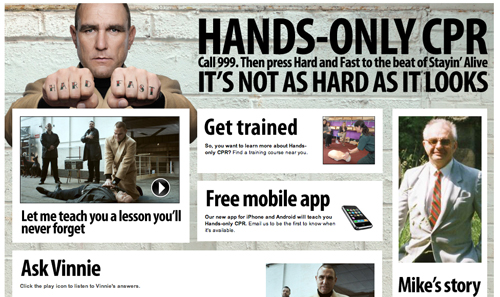
The British Heart Foundation has created a smart, joined-up campaign with a memorable hook that grabs people’s attention. They’ve successfully used the full range of paid, owned and earned media (the combination of a simple, themed, social website with traditional PR and advertising) to raise awareness in both mainstream and social media channels.

The ‘Hands-only CPR’ page within the charity’s website acts a social hub for the campaign. As well as a link to the British Heart Foundation’s Twitter feed (in which they encourage the use of the hashtag #hardandfast to help spread the message), they also include an iPhone app, YouTube videos of the TV ad and CPR lesson, case studies and a list of ‘Ask Vinnie’ FAQs.

There are also links to where visitors can buy the music, get the t-shirts and sign a petition to get emergency life-saving skills taught in schools.

What really works for me is the fun that has been injected into the campaign. They’ve not just used a celebrity for the sake of it. They’ve chosen Vinnie Jones and played up to his image as a ‘hard man’ to create a theme and character with whom the British public can identify.

And the use of the song ‘Stayin’ Alive’ is a masterstroke! Not only does it reinforce the overall message of the campaign but someone conducting CPR can push down on someone’s chest – hard and fast – to the memorable beat of the song.

Life-saving advice

As good as the campaign is from a technical point-of-view, the important thing to remember is the message it’s trying to get across – that anyone can perform CPR.

By creating a fun, memorable and integrated campaign, I believe the British Heart Foundation have given people (including me) life-saving advice that they may have never been aware of should they have created a set of non-descript flyers and an ordinary commercial.


My three words for 2012

Three windows by Kevin Dooley

Last year I decided to follow in the footsteps of Chris Brogan and choose three main words to live by throughout 2011. I published my three words on the 1st January 2011 and reviewed them in July.

A new year has now begun and before unveiling my three words for 2012 I think it’s worth making an end-of-year review of my three words for 2011:

Create

I’m a marketer, not an artist, and yet I consider the work I do as my art. And with art comes creation.

I didn’t want to produce average work in 2011 – I wanted to ensure that I created something of value and substance.

Although I’ve been blogging on and off for a few years, in May I launched my own self-hosted blog, One Too Many Mornings. Over the last 6 months I’ve published over fifty posts and I’ve tried to maintain a high level of quality in everything I produce.

Ship

The creative process is hard work and can often be daunting, fun and frustrating all at once.

But at the end of it all you have to deliver, otherwise you’ll be in a constant limbo where everything you do is always a work-in-progress.

One of the problems I’ve always struggled with is procrastination. Although I still deliberate too much over the work I do, in 2011 I managed to deliver more, be it publishing blog posts on a consistent basis, submitting quotations and marketing reports for clients or making time for others (friends, acquaintances and business associates).

Improve

Although ‘improve’ could be one of my three words every year, I felt it was a particularly pertinent word for 2011 due to various personal circumstances I found myself in at the end of 2010/ beginning of 2011.

I wanted to ensure that I made a concerted effort to develop and improve as a marketer and as a business professional in 2011.

I did this by attending networking events, marketing conferences, reading (and listening) selected books and seeking feedback from the people around me. I wasn’t afraid to ask for help as well as find out from others where I can improve… and what I do well, too.

My three words for 2012

And so as another year comes to an end, another one begins. I will continue to pay close attention to my three words for 2011 in 2012 but I must also set out three new words to concentrate on for this year.

As with those from 2011, my three words for 2012 are predominately centred around my work as a marketer. Nevertheless, I am mindful that there will inevitably be overlaps into other areas of my life, too.

Focus

With so many social media channels cannibalising our attention nowadays, it’s easy for one’s mind to wander from one status update to another.

However, a 140 character tweet is never going to change the world and there’s something to be said for concentrating and focusing on the big tasks that really matter.

Despite all the distractions (and these include TV, nights out and sunny days as well as social media), I am aiming to give myself the time and space to focus on accomplishing some valuable projects in 2012. My Google+ profile and Twitter feed  are not going to define me. But worthwhile, substantial and focused work might.

Confidence

I believe I have the talent and ambition to do the work I love. But sometimes I lack the confidence to really flourish.

To be successful and stand out from the crowd one has to be confident in one’s abilities. You see this with sports men and women all the time. A professional footballer can have all the skill and natural ability in the world but without confidence and self-belief this may never be revealed.

One of my goals for 2012 is to have more confidence to express my own ideas, write more opinion pieces and to speak and present in front of my peers. To form an opinion and express it confidently takes courage but if I want to progress then this is what I have to do!

Energy

Many of the people I admire the most have (or had) enormous amounts of energy to go with their ambition, passion and genius.

Sir Alex Ferguson, Steve Jobs, the Beatles, Sir Richard Branson, Jonny Wilkinson, Seth Godin… their energy and drive is phenomenal and is what has concentrated their minds to achieve all that they have.

There will be plenty of ups and downs over the next 366 days (2012 is a leap year!) and through it all I will need to maintain the energy and will to stay confident and focus on the goals I aspire to achieve.

What are your 3 words for 2012? What are you looking to accomplish over the next 12 months?


6 super iPhone apps for marketers

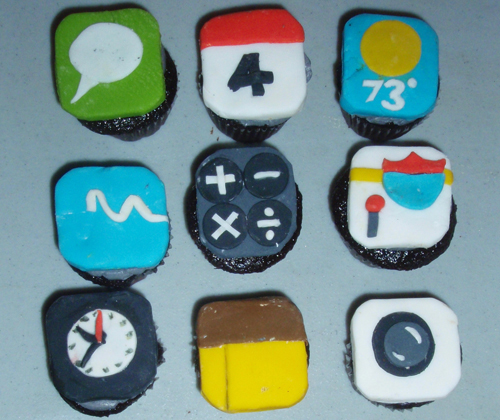
iPhone cupcakes by Rachel Kramer Bussel

Now that Christmas day has come and gone I think it’s safe to assume that MANY people will have received an iPhone from Father Christmas this year! When I first got my iPhone just over a year ago, I was blown away by the possibilities it offered (hint: I rarely use it as a phone!).

As a digital marketer, I often use apps to connect with my social networks, stay up-to-date with the latest news or save in-depth content for listening, reading or viewing at a later date.

So for anyone looking for a little inspiration, here are 6 brilliant apps that are essential for any marketer with an iPhone:

Evernote

Evernote allows you to make notes (written, verbal, images, website clippings) wherever you are and is brilliant for when you’re out and about.

There have been numerous times when I’ve wanted to make a note of something, perhaps because of a podcast or audiobook I’ve been listening to or a creative thought that’s come out of nowhere. Evernote lets me jot down whatever I’m thinking which I can then access later, either via my iPhone or on any other computer.

Instagram

I’ve evangelised about Instagram on this blog before so I won’t go into too much detail again. But I will take a little time to talk about why this photo-sharing social network is great for marketers.

The real beauty of Instagram lies with its simplicity. The app allows anyone with an iPhone to take intimate, artful pictures and tell short, little snap-shot stories about their lives which can then be syndicated via other social networks.

The popularity of Instagram is spreading fast, so much so that brands are beginning to jump on board and use it to create high-quality content that can be shared across a spectrum of social media outlets.

Hootsuite

Although TweetDeck is my main social media dashboard on my desktop and laptop computers, I find Hootsuite to be a far more intuitive and easy-to-use app on my iPhone.

I use Hootsuite primarily for managing my Twitter feeds, although you can also use it to manage your LinkedIn, Foursquare and Facebook accounts, too.

The app is simple, with an unfussy UI and functionality that allows you to add photos or a location to your tweets, as well as the ability to schedule updates for a later time and date.

Instapaper

I discovered Instapaper relatively late on (about a year after buying my iPhone) and it’s such a good app I don’t know how I managed before!

Have you ever been on a train journey or flight and wished you could connect to the internet to read an article or blog post you saw earlier?

Instapaper allows you to save web pages for later so that you can read them offline wherever you may be.

I don’t often buy apps (all the others in this list are free) but Instapaper certainly fits into the ‘worth it’ category at only £2.99.

TED

TED is one of my social media heavyweights and therefore the iPhone app is a a must-have for any marketer worth their salt.

The app organises hundreds of TED talks into different themes that range from business to music. Talks can be viewed there and then or bookmarked and saved for later.

As a marketer, I consider TED to be a fantastic resource for providing insight and inspiration into how I work as well as generating ideas for blog posts.

RedLaser

There are a lot of QR code reader apps out there but the one I’ve always used  is RedLaser.

RedLaser allows you to scan barcodes as well as QR codes in order to access additional product information or find out more about a brand via the web.


There are obviously many more great iPhone apps for marketers and I’d love to here what your favourites are and why.


5 examples of great Facebook brand pages

This post was originally published on Smart Insights on 2oth December 2011. I cross-post it here with all the links and tags for your reading pleasure!

As marketers constantly look for better ways to use social media to engage with customers and generate positive word-of-mouth and sentiment, a well-designed, thought-out Facebook page is a key platform to target consumers. Facebook brand pages can offer businesses, both large and small, an excellent opportunity to create a presence and a brand experience, but only if this experience is well planned and executed.

In this post I’ll look at some examples of companies that I think have created a great experience on Facebook that fits with their brand well. I hope these “best practices” give some ideas of improvements that could work for your Facebook presence. These examples all show these key ingredients of a great Facebook brand page, including:

  • A clear objective and raison d’être for the page
  • A good, professional design which is consistent with all other marketing communications
  • An impactful welcome page with a clear call-to-action
  • Integration of other social media outposts, such as Twitter, YouTube and a company blog
  • A lively, diverse set of updates on the Wall that generate conversations and comments
  • Rich media, especially good quality photos and videos
  • A newsletter sign-up form to capture more detailed information about fans
  • A set of house rules or posting guidelines to keep fans ‘on message’
  • Fun and interesting! People come to Facebook to chill out and to connect with their friends

So, here are 5 top Facebook brand pages that contain many of the ingredients listed above and my thoughts on what we can learn from them:

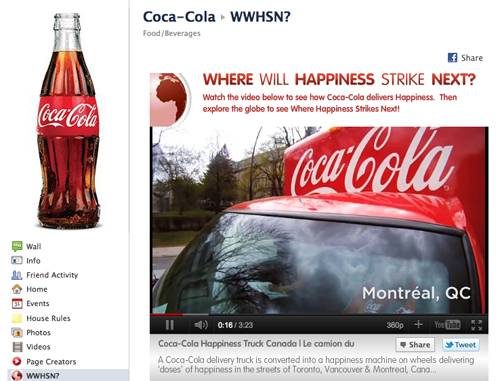
Coca-Cola

Likes: 36,294,451

Coca-cola Facebook page

What makes this page great?

With well over 36 million likes, Coca-Cola is one of the most followed consumer brands on Facebook. And how have they done this? By providing a rich mix of innovative, fun and immersive promotions and features that are exclusive to their Facebook followers.

Coca-Cola keeps their campaigns simple and uses a blend of photos and video to encourage fans to join in and participate. The page is fun and there’s plenty to do and see.

Key takeaways:

  • Be creative and encourage participation
  • Facebook’s EdgeRank algorithm favours photos and videos more highly than regular status updates, meaning they’ll stand a better chance of finding their way into followers’ News Feeds
  • Post both original and user-generated rich media to grab people’s attention and spark discussions
  • Use fun, simple and intuitive competitions to keep fans engaged

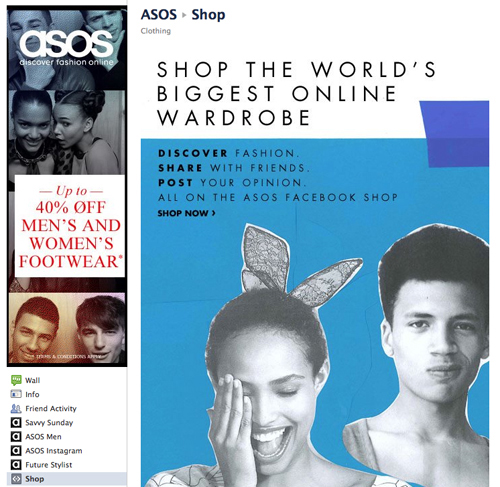
ASOS

Likes: 1,409,490

ASOS Facebook page

What makes this page great?

The online fashion retailer was one of the first companies to move into f-commerce and create a fully integrated Facebook store that is easily accessible from within the page.

However, it isn’t just the Facebook store that makes the ASOS Facebook page great – it’s the brand’s focus on creating a memorable customer experience for its fans.

ASOS regularly posts pictures of new fashion ranges to generate discussion, announces deals and promotions and have also created an Instagram feature showcasing behind-the-scenes pictures from magazines and photoshoots.

Key takeaways:

  • Follow the golden rule of effective Facebook marketing: create a customer experience that keeps users ‘in-system’
  • Create an environment that gives your followers everything they need within the Facebook page
  • Focus on engaging fans on your page by posting regular updates and answering fans’ questions on the wall
  • Be different and stand out from your competitors. Integrate features, competitions and social outposts that others haven’t (e.g. Instagram)

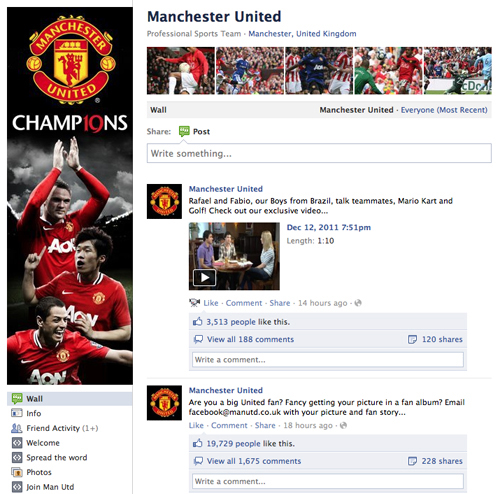
Manchester United

Likes: 20,637,665

Manchester United Facebook page

What makes this page great?

The Manchester United Facebook page gives fans an immersive brand experience by offering behind-the-scenes videos, exclusive interviews and timely, considered posts that range from breaking news to birthday wishes for the players.

The page also encourages fans to interact, not only through its use of (good quality) photos and videos but also through polls, contests and questions. Every fan responds differently so Manchester United covers all options.

Key takeaways:

  • Offer your Facebook followers an exclusive, behind-the-scenes experience they won’t find elsewhere
  • Use polls, contest and open questions to encourage comments and interaction
  • Don’t replicate your website on Facebook. Create a unique identity that keeps followers interested so that they comment, like and share content with friends
  • Post regularly but not so much that it annoys and frustrates your fans

Cisco

Likes: 233,091

Cisco Facebook page

What makes this page great?

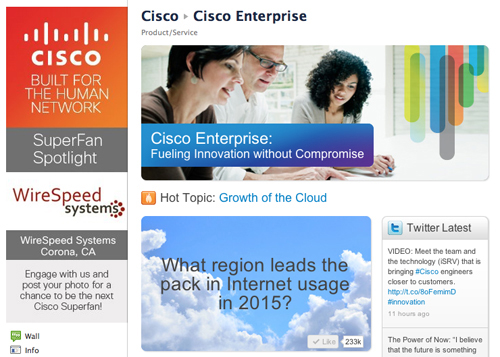
Facebook pages are not just for B2C brands. On the contrary, brands like Cisco have leveraged the popularity and appeal of Facebook to create a very well-designed, informative and immersive Facebook experience tailored to their customer’s and stakeholder’s needs.

Cisco has used its Facebook page to integrate its Twitter stream, blogs, YouTube videos and Flickr photos so that followers can discover more social content and information about the company.

What is also cool is a tab that allows followers to find a Cisco Facebook page specific to their country using the Cisco Facebook Global Map.

Key takeaways:

  • Don’t create a Facebook page because it’s the ‘cool thing to do’. Make sure your Facebook page has a clear raison d’être, preferably based on customer/ stakeholder research
  • Integrate other key social channels into the page to provide other social options for fans and increase visibility for those outposts
  • Create custom tabs that provide easily digestible information about your company or product
  • As your page, ‘like’ other pages to show your support for them and to comment on other pages and on users pages who have public profiles

EasyLunchboxes

Likes: 15,945

EasyLunchboxes Facebook page 

What makes this page great?

Just as B2B brands can make an impact using Facebook, small businesses can, too.

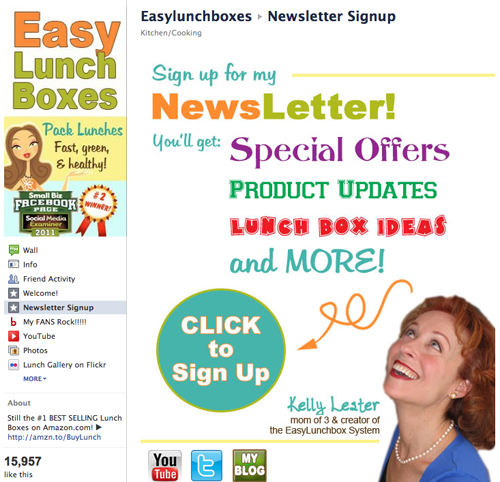
EasyLunchboxes has embraced many of the key ingredients that make up a great Facebook page, including a clear, impactful ‘Welcome’ page, lots of colourful, interesting photos and the integration of their blog, Twitter and YouTube channels.

However, one of the most impressive features is the company’s personable approach and responsiveness to anyone that comments, ensuring that fans feel as though they are interacting with a person rather than a faceless organisation

Key takeaways:

  • Make sure you design the page to a high standard and in a way that is consistent with the company website and all other marketing communications
  • Take the time to respond to comments and where possible initiative conversations and discussions
  • Stay on topic and post updates that are consistent with the product and what the brand stands for
  • Add a newsletter sign-up form with a clear call-to-action to capture more detailed information of your followers and fans 
What are your favourite Facebook brand pages? What is about them that makes them so good?