LeWeb London: two days of style, ego and elitism

LeWeb London

Last week I attended LeWeb London, the technology and start-up event from Loic and Geraldine Le Meur. Although LeWeb traditionally takes place in Paris in December, this year LeWeb came to London (in part at the bequest of the UK Government).

I was looking forward to attending LeWeb London, not only because I wanted to see the speakers and panel discussions, but to also meet some of the business leaders and experts taking part in the conference.

What I liked about LeWeb London

[break]
Venue and location

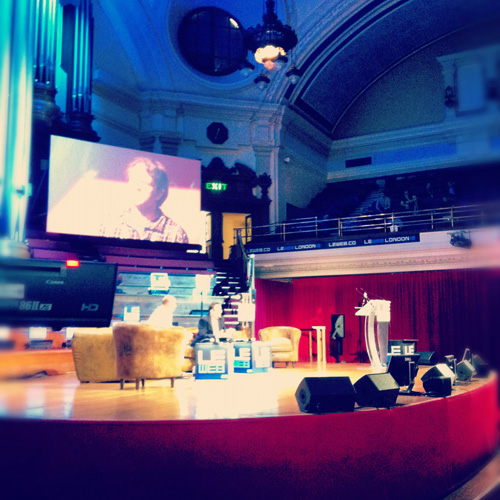
The venue and location for LeWeb London was pretty impression. The conference took place at the Central Hall in Westminster so it was great to go to an event in the heart of London, rather than further out away (e.g. Earls Court on the west side of the city).

The venue added a genuine element of character and charm to the proceedings and the juxtaposition of the traditional building with LeWeb’s signature colours and lights worked really well and added to the overall sense of style.

Production values

The production was taken very seriously and LeWeb was certainly produced to a very high standard. Looking back at the YouTube videos the quality really shines through and it’s certainly the most well-drilled/ choreographed event I’ve been to.

Special guests

What I didn’t expect was the impact of the special guests LeWeb had organised. I really enjoyed the music and dance from Lindsey Stirling as well as the comedy from Baratunde Thurston.

Lindsey Stirling added a real touch of class and style to the event and was a brilliant tonic to the technology and business spirit. I thought her music and performances were fantastic and because of LeWeb she has a new fan!

Although I only caught the second half of Baratunde’s presentation (I’ll catch the rest of it on YouTube), what I did see of it made me laugh… and think.
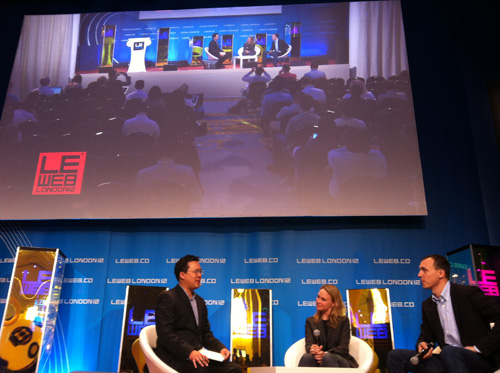
The social business track at LeWeb London

What I didn’t like about LeWeb London

[break]
Limited networking with experts

What I found most disappointing about LeWeb London was the fact that I wasn’t able to (more easily) meet the speakers, business leaders and experts who participated in the keynotes and panel discussions. I found this particularly disappointing because I had paid nearly £2,000 (over $3,000) to not only to watch the sessions and speak to fellow participants but to meet some of the high-profile speakers, too.

I could have saved a lot of money watching the event for FREE on YouTube in the comfort of my own home/ office if I’d had gone just for the sessions. But I hadn’t. I’d gone for the the opportunity to meet some of the people I’ve been reading about and following for a number of years.

It’s a real shame that so many of the experts and thought-leaders were so out of reach. The stage, entrance and ‘green room’ acted as a barrier. As much as I admire many of the speakers who attended LeWeb London, I do not regard them as celebrities and was therefore baffled as to why they were treated as such.

When I spoke personally with one of the main organisers of LeWeb about meeting some of the speakers, the message I got was that these guys are busy, have flown in from all over the world and that they can’t speak to everyone. I’m afraid this excuse really isn’t good enough. I travelled in to London specifically for LeWeb so I would have thought I’d have deserved the chance to meet more of the people I wanted to see.

Aggressive security staff

The security personnel at LeWeb was a real negative point. They were unfriendly, sullen and intimidating – is this really necessary for a technology/ web event? LeWeb is a technology conference, not an LA nightclub.

The interaction between attendees and staff at an event is an important touchpoint and unfortunately the security personnel personnel fell well below par. I was disappointed with the aggressive undercurrent that seemed to present throughout the two days and for me affected my overall customer experience of LeWeb.

Summary

Whilst many of the sessions were very interesting and thought-provoking, my overall feeling at the end of the event was one of disappointment and the main reason for this was due to the lack of access to some of the key speakers and experts.

If I had one word to sum up LeWeb? Elitist. I can assure you that I do not have an inferiority complex. It’s just that I felt there was a clear divide between the ‘experts’ and ‘everyone else’ and at times I felt I was on the outside watching a select group of people from the LeWeb clique.

It might be fair to say that I simply attended the wrong type of event for what I’m interested in. I’m quite sure that the majority of other attendees, be they budding start-up entrepreneurs or technology enthusiasts, got a lot from the event and I hope that they did.

Nevertheless, I thought it LeWeb would have been far more interactive and participatory and the lesson I’ll take away is to be even more selective the next time I choose to attend an event.


Yet another digital marketing podcast…

On The Air by Alan Levine

A Golden Age of podcasting

It was interesting to read Christopher S Penn’s post on podcasting this week. In it, Chris talks about figures indicating that (in the US, at least) the popularity in podcasts has increased dramatically over the last four years, with 28.6 million more Americans listening to them now compared to 2008.

It’s clear that with the growth of social media, SEO and other forms of digital marketing, there’s never been a better time to create, publish and share content via podcasting.

Create something special

But just because there’s a growing popularity for podcasting doesn’t mean that yet another new, shiny podcast will automatically gather an audience.

A quick search of digital marketing podcasts available on iTunes indicates that very few stand out, let alone manage to produce great quality content on a consistent basis (with Mitch Joel’s Six Pixels of Separation being one of the few exceptions).

As with a blog or a branded presence on a social platform like Facebook or Twitter, great podcasts need to provide something fresh, interesting and useful for their target audience.

Podcasting – like everything else – takes work

Earlier this year I made my first foray into podcasting myself. From the outset I was prepared to put in the work to make the podcast work. However, unfortunately the person I was working with didn’t have the same commitment or drive and unfortunately the project fell through.

This only goes to show that podcasting, like everything else, takes time and a lot of work to get right. Unlike advertising or sales promotions, it’s unlikely to generate a quick audience response from podcasting.

Now is the time to take advantage of the rising popularity in podcasting. But what are you going to do to make it count?


Duty

Elizabeth II

This week Her Majesty the Queen celebrates her Diamond Jubilee. For sixty years she has reigned as the sovereign of Great Britain and the Commonwealth with grace, dignity and professionalism. Regardless of one’s opinion about the monarchy, it can’t be denied that the Queen has served her duty with a level of commitment that can only be admired.

During the thirty years that I’ve been alive, I’ve not once seen or heard of the Queen complaining about the work she does. She carries out her duties and responsibilities with a conviction and calmness I only wish I could!

Do your duty

For those of us looking to make a difference, I believe we all have a duty in our professional lives to do our work not only to the level expected but also beyond, to a much higher level.

It’s not just about turning up to work for eight hours, five days a week. It’s also about ensuring that during those hours and days we do all we can to discover the best ways to do our jobs, exceed our targets and in the process make both ourselves and the organisational as a whole better.

Take responsibility

We must take responsibility for the work we do and ensure that we carry out our duties to the best of our abilities. We owe this not only to the people we work for but to ourselves, as well.

As a digital marketer, I believe it’s my duty to conduct myself and the business I do in a professional, ethical and committed manner.

It’s my duty to know the best and most up-to-date best practices and tools to use, be it SEO, social media or content marketing.

It’s my duty to read up on developments in the digital world as well as network and interact with thought-leaders and experts so I can remain well-educated and stay ahead of the game.

Lead by example

One of the aspects I admire most about the Queen is that she leads by example.

Like all of those for whom I have the greatest respect, the Queen doesn’t shirk her duties or responsibities. Instead she carries them out tirelessly and with great vigour and in the process has become a truly great ambassador for Britain and the Commonwealth.

The Queen has come to epitomise what it means to be a great monarch and she has done this through her actions and by fulfilling her duties and responsibilities to the highest level.

As Sir John Major has said:

“Around the world, whenever anyone refers to ‘The
Queen’, they mean ‘Our Queen'”.


What does your Facebook page have to offer?

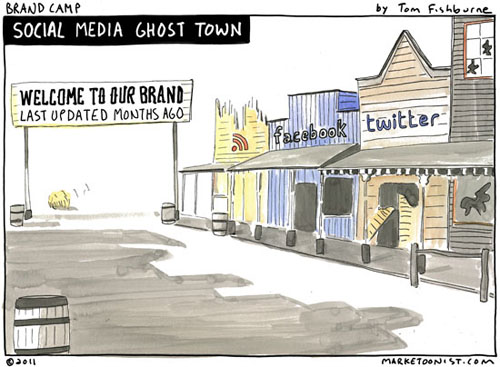
Social media ghost town

The creation of a Facebook page is only the first step in a long process to building an engaged following and community around a product, service or brand.

Maybe it’s the simplicity of the process. Or the fact that it doesn’t ‘cost’ anything to set up. But it seems many people are tempted into creating a Facebook page without first having a clear idea of why they need one, who it’s aimed at and how it will be managed.

The result: a half empty page with few followers and even fewer reasons to visit and ‘Like’.

Why do you need a Facebook page?

Before you set up a Facebook page, ask yourself: “why do I need a Facebook page”?

There are many good reasons to create a page. But the key is to know why you need one and how you’re going to use it.

Every Facebook page should have a raison d’etrea reason for its existence – otherwise people will think “what’s the point?”.

Your Facebook page should be used to support your overall business mission and objectives. Creating one just because ‘everyone else has’ is a near certain guarantee that the page will end up becoming a social media ghost town.

What are your goals (and what does ‘success’ look like?)

As soon as you’ve got a clear understanding of why you need a Facebook page, think about your goals.

For example, is the page going to be used for building brand awareness? Generating sales? Customer support? Community engagement?

The goals for your Facebook page should align with the reason why you started the page in the first place, as well as the mission and objectives for your business.

If your Facebook page is for brand awareness, then the number of Likes, shares and mentions you generate are a good foundation on which to measure the success of your page.

Alternatively, if your Facebook page has been designed as a customer support channel, the number of positive postings and comments in regards to problems or complaints would be better metrics compared to the number of Likes you’ve accumulated.

Why should people visit – and ‘Like’ – your page?

Once you’ve figured out why you need a Facebook page and what it will be used for, consider how you’re going to use it.

At this stage you should have a clear picture of who your audience is and what is likely to motivate them to visit and (even more importantly) ‘Like’ your page.

Facebook may have nearly 700 million users but this doesn’t mean that your page will automatically attract even a fraction of them. As with anything in marketing, a little thought is needed if you want to attract the right kind of people to your page.

The key is to offer value.

When somebody ‘Likes’ your Facebook page, they’re effectively giving you permission to post content into their News Feeds. You are competing for that person’s attention (from friends, family and other brand pages) so unless you can offer something meaningful, you’re unlikely to get a ‘Like’.

In other words, simply re-posting bit.ly links to your blog posts onto your Facebook page wall isn’t going to cut it.

Consider the type of content your audience engages with most as well as how Facebook’s EdgeRank determines what content is most likely to show up in fans’ News Feeds.

Don’t sacrifice time and investment in your own website

As Chris Brogan says:

“Your blog is your own real estate. Blogging inside anyone else’s platform is like renting a hotel room, putting up posters, and thinking it’s your place”.

By all means create a Facebook page. Just don’t put all your efforts into it.

Any traffic or engagement on Facebook doesn’t really belong to you. Because you don’t own the space there will always be limitations as to what you can do with the data.

Unlike a site of your own, you will not have access to detailed analytics over who those visitors are, where they came from and what they’re looking at.

Stand out and be counted

If you’re intending to set up a presence on Facebook, consider why – and then make sure you have a plan.

Take inspiration from Facebook pages that have really made a difference and offer your fans something special, something different.


How to find a job using social media

I am the orange leaf by Lisa Sexton

The economic crisis is continuing to bite and with unemployment in the UK at its highest level since the mid-90s finding a job is becoming an increasingly difficult task.

To get the right job takes focus, commitment and discipline. Competition for work is fierce and job-seekers need to find any edge they can to get ahead of the pack.

Employers seem reluctant to take risks in the current economic climate and sometimes a great CV and covering letter just isn’t enough.

One way of standing out from the crowd is to not just tell employers what you have to offer – but to show them. And social media offers job-seekers a multitude of ways to display their skills, talents and personality.

Start a blog and express yourself

It’s never been easier to set up a blog. As well as free platforms like WordPress.com and Tumblr, for those looking to create something with a little more substance open source software such as Drupal and WordPress.org allow you to create and host a website of your very own using a custom domain and identity.

Whatever platform you use, the blog should act as your ‘homebase’ and form the centrepiece of all your social media efforts.

Think about the type of work you want your ideal employer to see from you. If you’re a graphic designer, this might include branding concepts, typography or website layouts.

Or if you’re a budding cook you could use your blog to post your own recipes, ideas and video tutorials of your culinary creations.

A blog will allow you to express yourself and demonstrate thought-leadership in your area of interest, expertise or profession.

Build your professional network using LinkedIn

As the world’s largest professional social network, LinkedIn is an ideal platform for connecting and networking with others within your sphere of expertise.

Many people consider LinkedIn to be simply an online version of one’s CV. But it’s much more than that.

Once you discover how to use LinkedIn effectively you’ll see that there are a number of great ways to grow your network as well as further display your own skills and expertise to would-be employers in your industry.

The key features to consider include:

  • Create a detailed, focused profile targeted at your ideal employer
  • Connect and build your network
  • Recommend others. This will encourage people to recommend you in return
  • Join groups and add value to the conversations and discussions
  • Update your status to show your network what you’re thinking and working on

Promote yourself in 140 characters using Twitter

Twitter is a brilliant tool for building a following, becoming part of a community and getting a message out to a large number of people in concise, simple updates.

As you begin to build up original content on your blog, Twitter can be used to share and distribute that content to your following. The aim should be to add value to other people’s Twitter streams and encourage them to share your content with their following, thus improving the chances of getting your content out to a much wider audience.

In addition to sharing original content, Twitter is also great for sharing other people’s work, too.

By Retweeting what other thought-leaders and experts are saying, not only will you reinforce the relationships you have with those people but you may also begin to be seen as a curator of good content and someone who is always looking to learn and develop their knowledge.

As with the blog and LinkedIn, focus is required. The aim is to gain the attention of potential employers by tweeting about the things you want to be noticed for.

Have a plan

The tools I’ve mentioned in this post are just a handful of what’s available. There are many more tools to choose from and the key is to pick the platforms and social networks that work best for you and the job-seeking goals you’ve set yourself.

It’s important to have an idea at the beginning of the process as to what you want to achieve from using social media for your job search. Who are the people you want to reach? What do you want them to notice you for? What channels fit best with the work that you do?

The answers to these questions will give you a good understanding of your potential audience, the right social media tools to use and the approach you should take in order to reach those people.

Good luck with your job search and please get in touch with your stories of how you have used social media to find work.


One year on…

One by Andre Chinn

One year ago today I launched One Too Many Mornings and seventy-five blog posts later I’m pleased to say it’s still going strong!

The past twelve months has involved a lot of hard work but it’s been a lot of fun, too. I therefore thought I’d take some time to share a few thoughts about the blog on it’s first birthday and where I’m hoping to take it from here.

Talk, connect and educate

I started One Too Many Mornings this time last year because I wanted to create an online platform where I could share my opinions, thoughts and insights on the subjects I’m most interested in.

I also wanted to use One Too Many Mornings to build a community and a following so I could connect with other like-minded individuals. As digital marketers we’re having to learn all the time so I believe it’s important to meet new people and share ideas and best practices whenever possible.

The overall aim of One Too Many Mornings still holds true: to educate.

It’s not just about educating others but about educating me. As much as I want to share my content to help improve other people’s knowledge, I also blog to push myself to think more clearly, deeply and analytically about marketing, social media and digital communications.

Where next?

Over the course of the next year I hope to continue pretty much along the same path I’ve been following up until now but with some improvements and developments, too. The goal with any venture should always be to get to the next level and I intend to do exactly that with One Too Many Mornings.

In addition to writing about news and developments, I’m also planning on offering more posts with analysis, guidance and advice relating to both the strategic and tactical elements of digital marketing.

With everything moving and changing so quickly, individuals and businesses (both big and small) are constantly having to play ‘catch-up’. I plan to help small business owners, freelancers and marketing managers to stay ahead of the curve by providing regular, helpful content that will hopefully shed some light on many of the complexities of digital and social media marketing.

Creating a rich mix of content

I’d also like to develop One Too Many Mornings by offering a richer mix of content. Some of the areas I’m most interested in include:

Guest blogging

I’m currently a guest blogger for Smart Insights and I’ve gained a lot of value by writing for someone else.

I’d like to invite other marketing bloggers to write for One Too Many Mornings so that they can benefit from exposing their work to a new audience and so that One Too Many Mornings can offer a different set of opinions and insights from other people besides me!

Infographics

Over the past year I’ve published nine orginal infographics (although much of the credit must go to my very talented partner).

Good infographics are brilliant for summarising complex ideas or lots of data in a simple, easy to digest way and I’d love to create more infographics that can be shared and used by marketers across the social web.

Video

I’ve never experimented with video content but with YouTube being the world’s second largest search engine it’s clear that it’s a medium that offers a lot of potential value.

Although I currently use my YouTube channel to curate content from other sources, I’d like to create original content of my own to augment and add to what I’m already creating for the blog.

Podcasting

I’m a BIG fan of podcasts and there a number that admire greatly.

Although I’m very aware that enjoying a great podcast is a lot easier than producing one yourself, the opportunity to connect with others and create something as valuable as Six Pixels of Separation or Marketing Over Coffee really appeals to me.


So, thank you very much for reading and I hope you continue to do so over the next year and beyond!