Never give up

The English Premier League season came to a dramatic close yesterday, with Manchester City claiming the championship with a last-minute goal. Needless to say, as a Manchester United supporter it was hard to take!

But having followed Manchester United for over 20 years I’ve seen my fair share of late winners from the Red Devils. And one thing’s for certain, good luck has nothing to do with it.

Perseverance

What Manchester City showed all of us yesterday was the virtue of perseverance. To keep on going no matter what you’re up against.

When things aren’t going to plan (as it did for City after 66 minutes yesterday afternoon) it’s often tempting to panic and deviate from the strategy and tactics in place.

The key is to have belief in those around you and to stick to the script.

Good teams include individuals who have an understanding and respect for their colleagues and this confidence allows everyone to do their job properly and stay focused on the goal in hand.

It didn’t matter how much time was left in the game, the Manchester City players kept working, kept passing and kept playing their game.

The best team (usually) wins in the end

Like all good teams, Manchester City navigated the bad times throughout the season and remained focused on the goals and objectives they had set themselves.

They made adjustments, changed tactics when needed and continued to win one game at a time, knowing that by doing so they’d eventually accomplish their main objective.

Over the course of the season, Manchester City were the better team and they are, as a result, deserved champions. Just as it’s the case in business, the best companies (the ones that employ the best people, train well and work hard) eventually rise to the top.

However…

All good teams, clubs and companies bounce back from disappointment. They use the pain of disappointment to galvanise the group and focus on what must be improved to succeed next time.

The England cricket team overcame humiliation in the 2006/07 Ashes series to reclaim the urn from Australia in successive series in 2009 and 2010/11.

Apple came back from the dark days of the 1980s and early 90s to become one of the most respected and most valuable companies on the planet.

Likewise, I expect Manchester United to use this year’s league defeat to learn the lessons needed to improve for next season. They’ll look at the areas of the team that need strengthening, prepare well in the close season and the individual players will use the disappointment of failure to concentrate their minds on winning next time.

It’s been a topsy turvy season but despite my personal disappointment at the end result I’m hoping that this time next year I’ll be writing about how Manchester United are champions again and the lessons we can learn from their inspiring return to glory!


How Cowbird is humanising online experiences

As human beings, we are inherently social creatures and yet our experiences on the web often feel as though they’re becoming increasingly de-humanised.

Whether it’s people (and brands) constantly promoting themselves or the fact that anything produced online only holds people’s attention for a small amount of time, our experiences with others on the web are starting to feel shorter and more transactional.

In this video, new media artist Jonathan Harris talks about how he walked away from success and notoriety and was inspired to counter current trends whilst building Cowbird, the social storytelling platform.

4 key trends

Jonathan talks about four interesting trends that he’s noticed about human behaviour on the web:

1. Compression

Communication seems to be getting shorter. We’ve gone from letters to phone calls, and from emails to tweets. We’ll eventually get to a point where we simply grunt to one another!

2. Disposability

Videos, blog posts, tweets, Facebook updates – they only capture people’s attention for a finite amount of time (and usually only a few hours at the most).

Even major internet campaigns, such as Invisible Children’s Kony 2012 campaign seems like a distant memory even though it was big news just a month or so ago.

3. Curation

More and more people are using other people’s content to reflect what they think and who they are.

4. Self-promotion

People are turning their lives into online advertisements, using social platforms like Facebook and Twitter to shout out to the world: “look at me and how awesome I am!”.

Establishing a more humanised online experience

In developing Cowbird, Jonathan Harris has focused on flipping these four trends to create a more engaging, permanent and human experience on Cowbird:

Deepening

Instead of compression there is a focus on deeper, more richer content experiences.

This deepening of communication allows Cowbird users to express themselves in the kind of detail they might not be able to do elsewhere.

Timelessness

Instead of disposability Cowbird embraces the concept of creating work that will be around longer than a couple of hours.

Like old-fashioned notebooks, Cowbird is about creating meaningful stories that will endure.

Creation

Instead of curating other people’s work to express themselves, Cowbird encourages users to express themselves by creating new, original content that will allow them to express their personality and individuality.

Self-reflection

Whilst self-promotion is about showing off, self-reflection is about being more contemplative about oneself and communicating this accordingly.


I believe we can all learn and take a lot away from these trends and from the way Jonathan Harris has developed and launched Cowbird.

Although there’s a place for tweeting, curating content based on other people’s work and even self-promotion, we should also consider taking a deeper, more creative and thoughtful approach to communicating with others online.

Five ways to boost your creativity

Lamps by Maureen Didde

This post was inspired by the article ‘The New Rules of Creativity’ in the May edition of Wired (UK) magazine.

As marketers, it’s important that we keep a creative mind-set in much of the work we do. Whether it’s thinking up concepts for a new campaign or generating ideas for a series of blog posts, creativity is often the key ingredient for success.

But what can we do to stimulate creativity? How can we give our brains a jump-start when we’re looking for inspiration?

Here are five scientifically tested tips that you can use to super-charge your imagination and get your creative juices flowing:

1. Think like a child

Picasso once said: “every child is an artist. The problem is how to remain an artist after he grows up”.

So how do we retain that youthful artistic spirit as we become reserved and modest in our old age?

The answer is to continue to think, imagine and dream like a child regardless of our age, profession or position within a company.

To become creative, we need to let go and take ourselves a lot less seriously. Children have the knack of being completely uninhibited and can therefore express themselves more freely.

We must also learn to suggest ideas regardless of how silly they might seem. Sure, they might appear a little whacky at first but by getting those ideas out there we can debate and refine them later.

2. Don’t brainstorm – debate

One of the first things most teams do when they want to get creative is to call a brainstorming session. Everyone gathers round and under the agreement that no one will criticise anyone else’s ideas the brainstorming begins.

However, research has indicated that traditional brainstorming approaches are not particularly effective and that much of this is down to the ‘no criticism’ rule.

Studies have shown that teams that debate and even criticise other people’s ideas are more likely to generate more creative results.

Far from being an inhibitor of creativity, debate and criticism can in fact stimulate ideas because it encourages us to engage more fully with the work of others and to reassess our own thought processes and points of view.

3. Embrace constraints

There’s a reason pop songs have verses and choruses and poems follow a specific structure, such as a sonnet or a limerick. These limitations allow the artist to think in a more holistic and creative fashion precisely because of the restrictions put in place.

Giving yourself a boundary or constraint focuses the mind on what really needs to be accomplished.

Twitter is a great example of this. By restricting users to 140 characters it forces them to remove any unnecessary words and waffle and say exactly what they need to clearly and concisely.

4. Take more breaks

Sometimes we can experience creative blocks where we feel as though we’ve hit a brick wall and we’re not going anywhere.

Working continuously on something doesn’t always lead to better results and research has shown that taking regular, pre-defined breaks can reinvigorate the mind.

Going for a walk, playing a musical instrument or reading a book can help you to focus on something new for a while before going back to a problem with a fresh mind and perspective.

Getting out and about can also generate new ideas in of itself. I’ve lost count of the number of times I’ve had new ideas whilst out running, watching a movie or even swimming in the sea on holiday. It’s as if the ideas are there percolating in the background and spring up when I least expect them to!

5. Watch more comedy

Research has shown that happy people are more creative. Being in a positive mood lets the brain enter an open and playful state allowing you to think in new, imaginative ways.

I like to watch comedy not only to make me happy but also because I’m intrigued by how the writers and performers create the work they do.

Making people laugh is one of the hardest things to do and I therefore try and take inspiration from the way great comedians construct their acts.

What do you think of the tips I’ve suggested here? What methods and techniques do you use to boost your creativity?


Inbound marketing for small businesses

Inbound marketing for small businesses

This post was originally published on Smart Insights on 24th April 2012. I cross-post it here with all the links and tags for your reading pleasure!

Setting up and running a small business is both daunting and exciting in equal measure. But with the economic downturn combined with an increasingly crowded competitive landscape, the need to promote your business and get your message ‘out there’ is as important as ever.

Marketing is a huge challenge for small businesses, particularly start-ups who have no established customer-base or community around them. Traditional advertising is an important – and absolutely necessary – way of letting people know who you are.

But with limited money and resources, what other options are there for getting your message out there about your fantastic new business? One strategy I would highly recommend is inbound marketing.

Inbound marketing – a definition
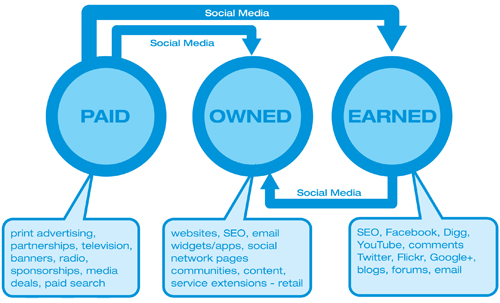
Paid, Owned and Earned Media

For any business, large or small, there are three key media types one can use to connect with consumers: Paid, owned and earned.

Whilst advertising and website development falls into the first two categories respectively, inbound marketing is primarily focused on earned media, which is essentially earning people’s attention by creating content that others share and start conversations around.

Inbound marketing can therefore be defined as “any tactic that relies on earning people’s interest rather than buying it”.

What is inbound marketing?

Inbound marketing is about getting found online by using a range of ‘free’ online marketing tactics to target people already learning, researching and shopping in your industry. It’s about adding value and helping people.

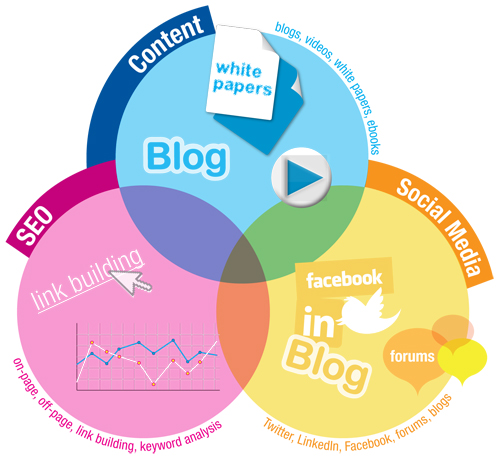
Inbound marketing can be defined as using a combination of SEO, social media and great content marketing to attract prospects into your website rather than using disruptive outbound marketing tactics (such as advertising, sales promotions and direct mail) to interrupt people who are not necessarily interested in what you have to sell.

Why use inbound marketing?

Inbound marketing is a very effective form of marketing because it’s about adding the ‘human touch’ to business interactions. It’s about encouraging companies to not only broadcast but involve a prospect or customer in what they’re promoting.

Whilst inbound marketing can certainly be considered cheaper than many traditional marketing tactics, it does take a lot of time and commitment. There’s no easy way around it – inbound marketing requires a lot of effort but if implemented correctly will pay dividends.

How should inbound marketing be used? And will it work for you?

Whilst inbound marketing has been phenomenally successful for many large and small businesses – and particularly those in the Business-to-Business (B2B) sector – in the commercial Business-to-Consumer (B2C) sector its use has been less widely reported. There are far more case studies about technology companies using inbound marketing to increase website traffic and leads than there are about small boutique clothes shops!

However, I believe that inbound marketing can be used by anyone to promote themselves and the products and services they have to offer. It’s about finding the right suite of tools and tactics that work for you and the type of customer you’re looking to attract.

Key inbound marketing tools and tactics for small businesses

Inbound marketing is a combination of tools, tactics and channels revolving primarily around content. For inbound marketing, content is king and it’s the key to getting people talking about what you have to say and attracting them into your site (where you can tell them more about your brilliant business!).

As Rand Fishkin says:

“No matter the form; content is the foundation of great content marketing”

Blogging

If great content is essential to effective inbound marketing, then creating a blog for your business is a perfect way to begin building a ‘social hub’ or platform for your company.

A business blog should become the central point for all inbound marketing efforts, primarily because you own this space. Social networks are great (and we’ll come on to those shortly) but you don’t own those channels. You’re only ever renting them. So having your own piece of digital ‘real estate’ will allow you bring people into a space which you own and control.

One of the misconceptions about blogging is that they have to be a daily dose of 300-500 words. But a blog doesn’t have to be a ton of text.

A great business blog should be built around and for your customers. If your audience is likely to respond better to images or video, then create a blog that is very visual and makes use of interesting photography and video.

The aim: To create original content that your target audience will love and share and keep them coming back for more.

Case study:
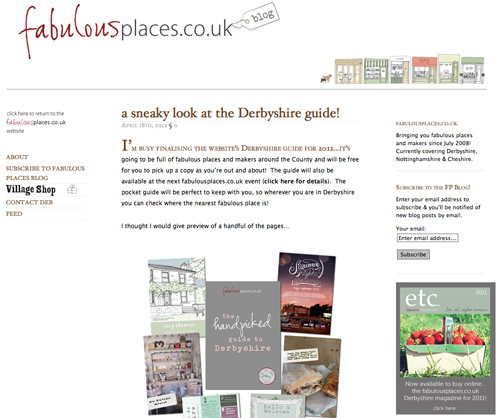
Fabulous Places blog

Fabulous Places is a small local business recommendation site. They feature and promote local cafes, restaurants and shops within Derbyshire, Nottinghamshire and Cheshire in the UK.

To complement the main website, Fabulous Places also has a blog which is written and run by Deb, the company’s founder.

The blog is largely image-based and features short, regular posts covering various topics, from interesting suppliers and events to great things Deb has spotted on her travels.

The visual nature of the blog and the personal touch the founder gives to it fits nicely with the company’s main website and is very well designed and suited for target market Fabulous Places is aiming for.

Social networks

Another key inbound marketing tactic is social networking. Any SME (small-to-medium sized enterprise) or start-up should consider leveraging the right social network to build awareness of their brand, products and/or services.

The cool thing about social networks is that they can be used to both create and curate content and can therefore be used alongside a blog to build an engaged audience around a brand.

The key to good social networking is to choose the social network that works for you and your customers. There’s really no point in creating an impressive Facebook presence if the majority of your prospects and customers are hanging out on Google+. Likewise, don’t invest in Pinterest if you’re likely to get more value using Twitter.

Facebook, Google+, Twitter, Pinterest – choose the social networks that fits best with your brand and customers.

The aim: To build a following and an active community around your brand using a combination of content creation and curation.

Case study:
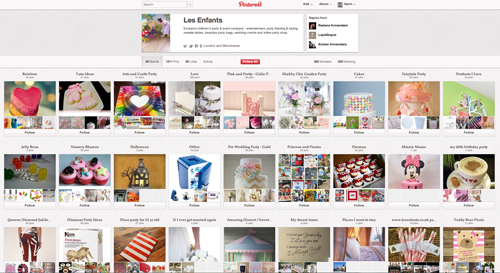
Les Enfants on Pinterest

Les Enfants is a children’s party planning company. In addition to having a blog and a presence on Facebook and Twitter, Les Enfants have also made great use of the social photo-sharing site, Pinterest.

Les Enfants uses Pinterest to share examples of what they have for sell as well as other people’s cakes, decorations and party ideas, too. You can therefore get a clear idea about the Les Enfants brand identity just by looking at their pinboards.

Les Enfants have used Pinterest to successfully combine content creation and curation to paint a picture of everything the brand stands for – style, colour, caring and fun!

SEO

Search is how we find things on the web and we use search engines such as Google, Bing and Baidu to discover, gather and filter information.

Search is still one of the most popular online activities (alongside email) and is likely to continue to grow alongside the rise of other activities such as social media. There are currently more than 3 billion searches per day on Google and search is still thought to bring in the most qualified, targeted traffic to one’s website.

80% of people count on the organic results that appear when they search for something online. And despite this, $35 billion was spent on pay-per-click (PPC) advertising in 2011 compared to $2 billion on SEO.

The fact that nearly 90% of companies’ marketing budgets are being spent on where 20% of the clicks happen indicates the popularity and reliance on bought media but as a small business with limited resources why not invest in the work that will get your website listed in the results that matter most to people?

Good SEO is not about stuffing as many keywords into your content, titles and meta data. It’s about ensuring your website is designed and structured in a way that allows visitors to successfully find the information they want about you so that they can make a more informed purchasing decision.

The aim: To be found in search results for specific keywords relating to your brand by developing an online presence that is content-rich, engaging and meaningful to your target market.

Social search

If search = discovery, then discovery leads to sharing.

As social media continues to grow and permeate how companies do business (hint: social media does not have to be owned by marketing), people’s search results are beginning to be affected by their social graph, i.e. what their friends and contacts on social networks are saying.

Social media is affecting traditional search engine results in a big way and every company – big and small – should take notice and act.

For example, if someone searches for ‘cupcake shop Derby’ on Google, the results that are served up will likely be a mix of what your contacts on Twitter and Google+ like as well as the normal listings. Google is attempting to augment their traditional search results with what your friends are saying they’re interested in.

This is a big deal because old-school ‘black hat’ SEO techniques are no longer valid. Google (the world’s no.1 search engine) is putting more emphasis on quality content and without quality content (from blogs and social networks, for example), you’re unlikely to get the shares, likes and +1s required to get Google’s attention.

Google is basically saying that if people are repeatedly liking and sharing your content based on these particular keywords, then your site must be relevant to this particular audience.

The aim: To stay relevant in search by ensuring that your brand is being found, talked about and discussed throughout the social web.

Email marketing

With the wave of interest in social media continuing, email marketing is often overlooked despite remaining one of the most effective inbound marketing tools for small businesses.

The goal with email marketing is to send out interesting, relevant messages to a group of willing subscribers on a periodic but regular basis. As with all other forms of inbound marketing, email is about developing a relationship with your prospects and customers by offering valuable content, i.e. don’t just email subscribers when you’ve got something to sell!

Email marketing is a straightforward, easy to implement tactic and the results from an email marketing campaign are often quite easy to analyse.

It’s also possible to integrate your social media efforts into your email marketing strategy, too. For example, in your emails always ensure that you contain clear links to your social media outposts and encourage your readers to share your email content with their social networks.

The aim: To build a database of subscribers and to send out frequent, interesting emails that are engaging, add value and keep your brand in the front of your audience’s minds.

Summary

I believe inbound marketing can be incredibly useful for any small business or start-up wanting to raise awareness of their brand online. More and more people are spending time on the web and it’s therefore vital that small businesses without an established audience or customer base promote their brands across the various online channels at their disposal.

By using a combination of social media, search and email marketing, any small businesses, regardless of their product or service offering, can earn people’s interest and attract prospects into their website by engaging them with valuable, helpful and interesting content.



5 business lessons from Novak Djokovic

Novak Djokovic by Edwin Martinez

With the tennis season starting to hot up as summer approaches, we thought it might be a good idea to look at one of the sport’s biggest names and try and find out what they can teach us about… business!

What can a tennis ace teach us about business?

Novak Djokovic is the number 1 ranked male tennis player in the world and in the last few years he’s taken the tennis world by storm by winning Wimbledon and beating nearly everyone that faces him.

So, what business lessons can we learn from Novak Djokovic? Here are 5 to get you started:

1. Know Yourself Better than your Competitors

  • Focus on your own game
  • Don’t waste too much energy looking at what others are doing
  • Work on improving your own skills and attributes

2. Refine and Improve your Techniques

  • There’s always room for improvement
  • Nobody (including top football stars like Lionel Messi and Cristiano Ronanldo) get good overnight. It takes practice, practice… and more practice!
  • Novak Djokovic rose to the top of the world rankings through hard work and dedication

3. Keep Focused on Your Goals

  • Ignore internal resistance and external doubters and concentrate on the goals you want to achieve
  • Have a combination of long-term, ambitious goals as well as short-to-medium term targets
  • Make your objectives SMARTSpecificMeasurableAttainableRealistic and Timely

4. Cracking a Competitive Niche

  • Despite Roger Federer and Rafael Nadal’s dominance, Djokovic broke into this competitive niche by focusing on his game and finding an edge over his rivals
  • It’s important to have self-belief and to focus on what you need to do to break into a competitive niche
  • What can you offer different to the incumbents?
  • Sometimes dominant businesses can become complacent. Be aware of this and take advantage

5. Practice Makes Perfect

  • Perfect practice makes perfect. Practice in the correct way so that you can hone the right skills needed to be number one
  • Mistakes happen but the important thing is to learn from them
  • Consider point number 2: Refine and Improve your Techniques
Also – don’t foget to be humble and thank those that have helped you along the way!

10 key ingredients of a perfect landing page

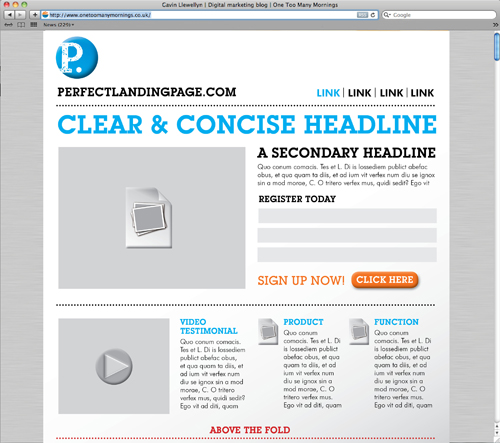
The perfect landing page

Landing pages are essentially pages built to convert. They’re designed to be the first page a visitor sees in order to show them the information you want them to see, usually after clicking on an email or a pay-per-click ad.

Built to prompt action

“A landing page is any page on a website where traffic is sent specifically to prompt a certain action or result”

Copyblogger

Instead of sending a visitor to a standard page on your website (where they might struggle to find the information they need straight away), a landing page is used to present them the right information immediately and encourage them to perform a certain action (e.g. subscribe to a newsletter, download something or click-through to buy).

Although landing pages have traditionally been used primarily for pay-per-click and email campaigns, they are being increasingly used for other digital marketing efforts too, including social media campaigns and affiliate links.

Define your goals

As with any other element of marketing, a good landing page starts with a set of clearly defined goals and expectations.

By knowing up front what you want to achieve and how you’re going to measure the results, the page can then be built and designed around those specific metrics.

According to Seth Godin, a landing page (in fact, every page) can only cause one of five actions:

  • Get a visitor to click (to go to another page – on your site or someone else’s)
  • Get a visitor to buy
  • Get a visitor to give permission for you to follow up (by email, phone, etc). This also includes registration
  • Get a visitor to tell a friend (for example using social sharing)
  • Get a visitor to learn something, which could even include posting a comment or giving you some sort of feedback

According to Seth, if you’re going to invest the time, money and energy in a landing page then it makes sense to optimise that page to accomplish just one (and perhaps two, but no more) of the actions above.

10 key ingredients of a successful landing page

I’ve seen many good blog posts, articles and infographics that effectively illustrate what a good landing page should look like and how they should be structured.

Whilst most of the advice on how to create good landing pages go into varying degrees of detail, what is consistent amongst many of them are the following 10 characteristics:

1. Clear and concise headlines

Create a clear, bold heading that stands out and gets to the point.

Visitors arriving on a landing page usually have a specific goal or intention in mind. A clear headline should be relevant, engaging and encourage the reader to scan down the page for more information.

2. Compelling copy

The copy should complement the headline and be just as engaging.

Good copy is clear, concise and persuasive and should support your call to action (CTA).

3. Strong call to action

You must have a strong call to action that is tied to your goal and supported by your headline, copy and supporting images and/or video.

Ask yourself: “What is the single most important action I want the visitor to perform as a result of reading this page?”.

It is essential that your visitor knows exactly what to do next in order to fulfil that action.

4. Good spelling and grammar

If you’re going to ask for a visitor’s contact or billing information then you have to gain their trust.

Poor grammar and spelling mistakes is not professional and will not help you convince a prospect to put their faith in you.

5. Call to action buttons should stand out

The call to action button should describe exactly what you’re going to get (‘register for free’ or ‘sign-up now’).

They should be big, bright (orange and yellow work well) and positioned in a prominent place on the page.

6. Testimonials

Take advantage of testimonials and recommendations as well as other trust indicators like third-party security certifications.

A genuine endorsement from an advocate of your product or service reduces the risk in a prospect’s mind and can be the difference between a visitor converting or not.

7. Go easy on the links

Although links to other internal pages or to external sites are OK on a regular web page, a landing page isn’t a regular web page.

Too many links can distract the visitor from converting so it’s therefore important to keep them to a minimum.

8. Include images and video to augment the copy

Great photos and video can be used to back-up testimonials or showcase the product in more detail to encourage the prospect to find out more and convert.

As with the headlines and copy, photos and video shouldn’t be too fancy or long-winded and must get to the point.

9. Stay above the fold

The space on the page the visitor can see without having to scroll down is ‘above the fold’.

It’s important to make things easy for the visitor so your call to action must be above the fold to give them every opportunity to click through and convert (although there’s nothing wrong with placing another call to action below the fold).

10. Test!

What works for one website might not work for another. It’s therefore important to always be testing.

Testing is essential for ensuring a landing page is doing its job correctly. Run A/B tests, change copy, videos, images and call to actions to see what works best for your visitors.

Keep it simple!

One of the overarching characteristics of a good landing page is simplicity. Simplicity in design, copy and structure.

A good landing page isn’t about extravagant design and poetic language. It’s about short, sharp, punchy headlines, copy and imagery that support your call to action. Anything else might distract the visitor from performing the action you want them to.

Remember: simplicity is the ultimate sophistication!